









As a data nerd, one of my monthly fixes is the latest SMMT figures, especially the March and September figure. The exciting story this year has obviously been the remorseless march of the big five Chinese new entrants (BYD, Chery, Geely, Jaecoo and Omoda) at the expense of the heritage brands.
To September this year, the overall UK market has grown by an astonishing 10.2%, with the top five Chinese brands growing by a whopping 198%. These five brands alone account for approximately 85% of the entire growth in the UK new car market.
What we are seeing in UK automotive is the emergence of a three-tier market:
- Tier one – Hyper growth: The top five Chinese newcomers, building market share at a remarkable rate.
- Tier two – Steady as she goes: The established brands broadly holding their own, albeit under increasing pressure.
- Tier three – The losers: The traditional manufacturers experiencing significant declines in sales and market share.
This article looks at each of these in turn and considers what the losers should be doing to reverse their fortunes.
Tier one – Hyper growth
It is difficult to know which superlative to use when describing the explosive growth of the Chinese new entrants this year as the following table illustrates.
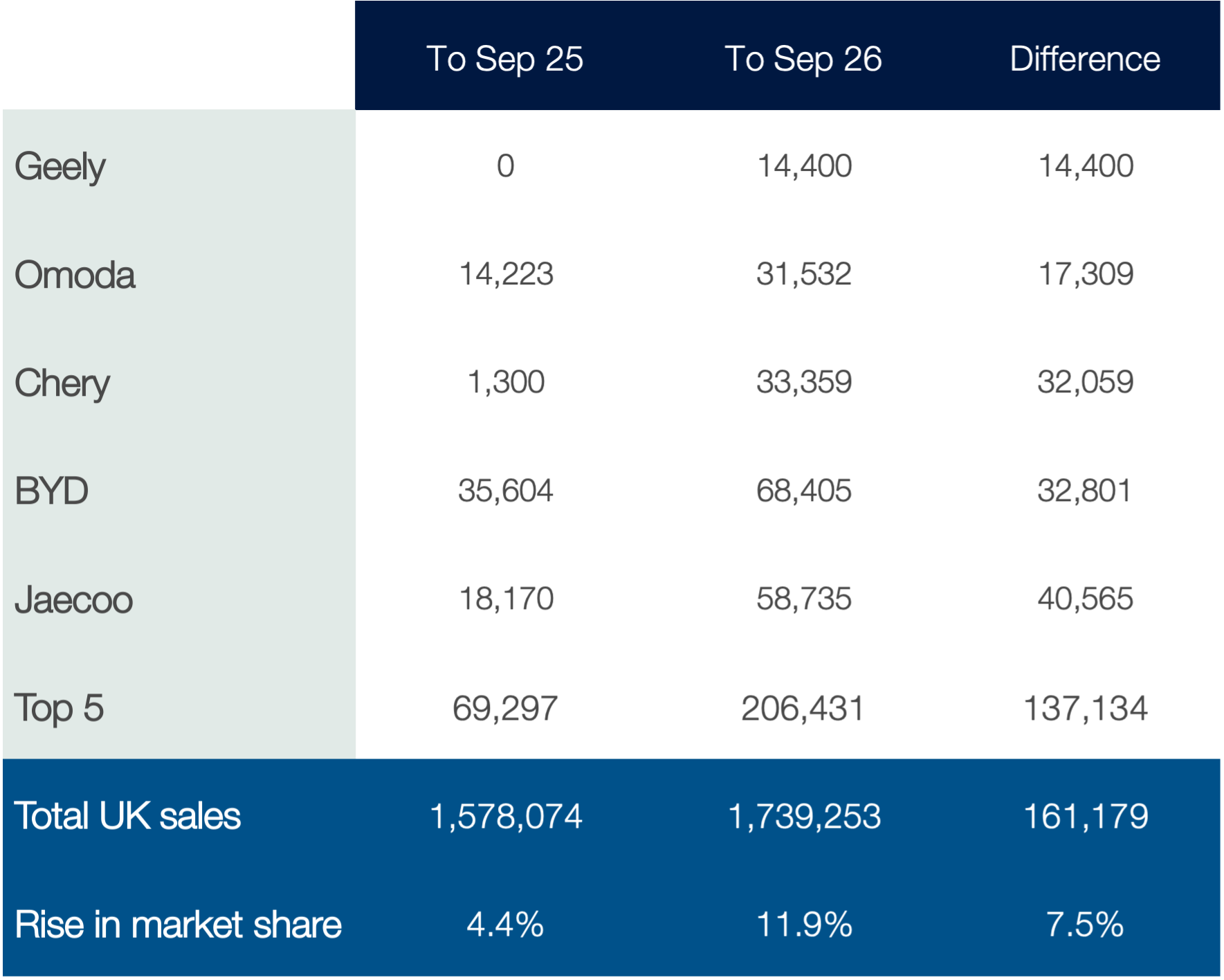
This time last year, Geely had not sold a single vehicle in the UK. Now it is already bigger than such brands as SEAT, Lexus and Fiat!
There is little sign that this growth is slowing, and other Chinese brands are following a similar trajectory. The Chinese brands are not only growing the size of the new UK market but are taking substantial market share from OEMs who have spent decades establishing themselves.
Tier two – Holding steady
The larger OEMs in this tier are generally sitting around their normal market share, although there are some notable exceptions. MINI is up 8,658 cars, Tesla 11,302, Citroën 11,570 and MG 13,536. These are significant increases, although they come with an existing customer base and established market presence.
The OEMs in this tier are generally doing perfectly well, but there is no doubt that the Chinese newcomers are nibbling away at their share. Volkswagen is down 2,992 cars year to date. In the context of 137,802 registrations, this can is totally acceptable, especially compared with the declines of other brands.
For the moment, tier two OEMs are holding their ground. The interesting question is how long they can continue to do so as Chinese brands expand their model ranges, dealer networks and marketing investment.
Tier three – The losers
The five manufacturers suffering the largest declines have a real challenge on their hands. Combined, they have sold 47,916 fewer cars than at the same point last year.
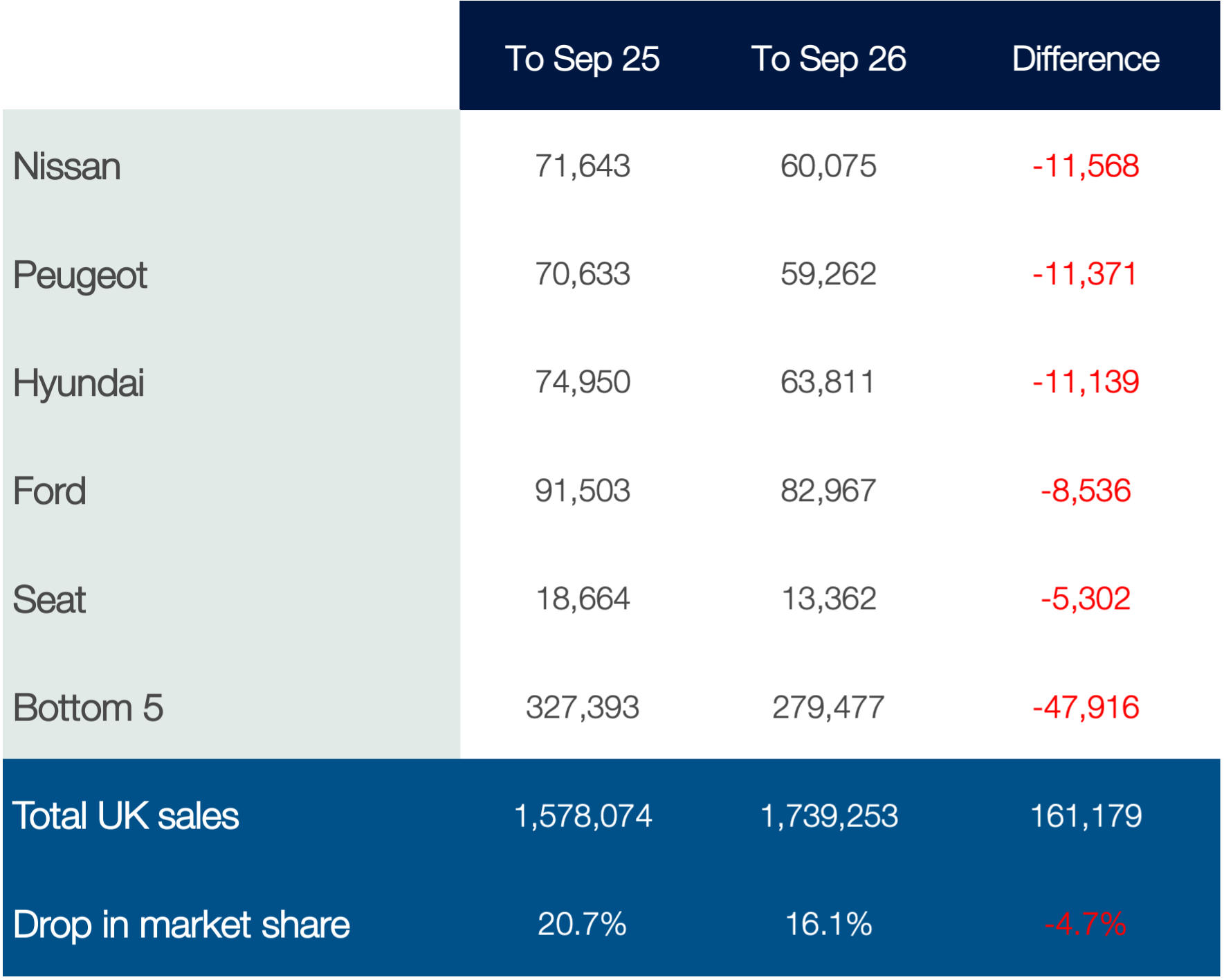
To put this decline into perspective, BYD who arrived in 2023, is now bigger than Nissan, Peugeot or Hyundai!
The tier-three losers are being hit by a double whammy. Fewer new vehicles sold means fewer part-exchanges entering their dealer networks, reducing used car stock and the potential contribution from both new and used sales. In the longer term, fewer new registrations today mean fewer opportunities for servicing, maintenance and repairs tomorrow. This is not simply a problem for the manufacturers. It has serious implications for the profitability and long-term viability of their retailer networks.
So, if you are an OEM in tier three or getting close, how should you respond to the threat?
The first thing the tier-three manufacturers need to recognise is that the Chinese new entrants are not going away and they need to compete. Hoping that customers will return to familiar brands is not a viable strategy. Next, they need to focus on their considerable advantages, namely their existing customers, established dealer network and years of customer data. Finally, they should focus on three priorities:
1. Fight harder to retain existing customers
Manufacturers and retailers know when customers bought their cars, when their finance agreements expire and when they last visited a workshop. This information is marketing gold dust. Rather than waiting for customers to appear in a showroom, retailers with the support of their manufacturers should be proactively targeting them with relevant and timely offers that are competitive.
Losing an existing customer to a Chinese competitor is particularly painful when the opportunity to retain them was sitting in the retailers’ database.
2. Stop wasting the enquiries you already receive
As competition intensifies, every enquiry becomes more valuable. Yet too many retailers still fail to answer calls, respond quickly to enquiries or follow up consistently. Manufacturers should be less brand focussed and instead spend their resources on driving leads to their retailers and measuring their success.
3. Understand what marketing actually generates sales
This is where I believe the greatest opportunity lies. Automotive marketing has become increasingly fragmented. Customers move between Google, Auto Trader, manufacturer websites, social media and dealer websites before finally making contact. Yet much of the industry still measures success through clicks, website visits and leads rather than actual sales.
If manufacturers and retailers cannot identify which marketing channels are generating enquiries for their brands, and which enquiries are converting into sales, how can they possibly allocate their budgets effectively? Proper marketing attribution, linking the complete customer journey to the eventual sale, from; platforms such as Mediahawk, should be fundamental to every marketing strategy.
The heritage brands cannot necessarily outspend or outprice the Chinese newcomers. But they can out market them.
The winners won't necessarily be those spending the most on marketing. They will be those who understand which marketing works, respond best to enquiries and retain the customers they already have. For the tier-three brands, that could be the difference between recovery and continued decline.
