
IQ
Insight
Quarterly
Q3 | 2026

Britain’s supply chain choice: decline or diversify





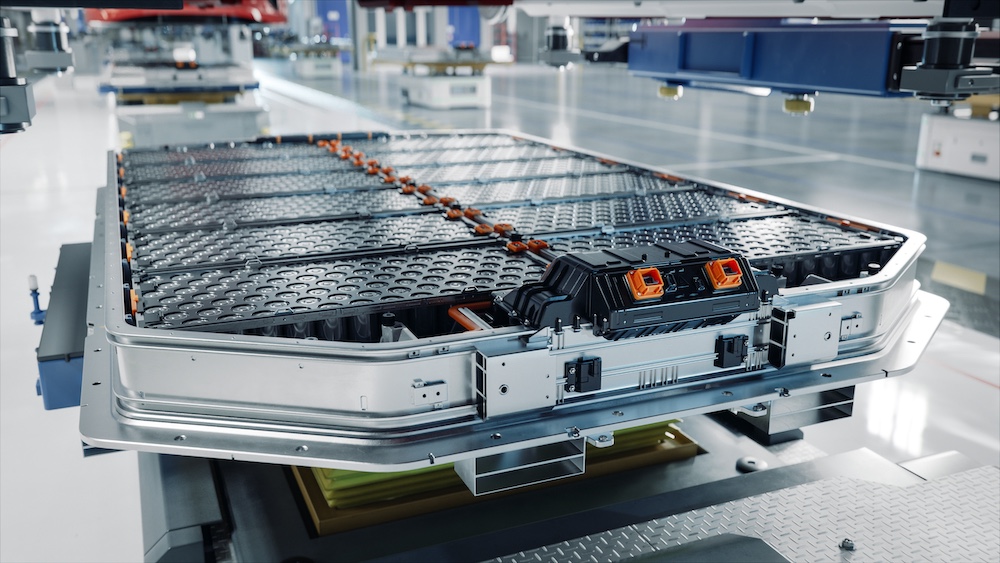





The debate around the future of UK manufacturing has often focused on the decline of passenger vehicle production. However, a growing number of manufacturing leaders argue that the challenge goes beyond falling automotive demand and there needs to be a repositioning of Britain's industrial base towards faster growing sectors such as aerospace and defence.
The automotive supply chain under pressure
The concerns stem from a sustained deterioration in UK vehicle production with production levels currently particularly low given some model changeovers - though it is anticipated to grow albeit not to historical peak levels. Automotive manufacturers are facing increasing international competition, while UK suppliers contend with structural disadvantages including higher energy costs, labour rates, slower investment cycles and a less favourable industrial environment than many overseas competitors. The issue is no longer seen as a temporary downturn and has the hallmarks of a long-term shift in global competitiveness for UK companies, especially with the impending threat of Chinese car production volumes.
As vehicle manufacturers seek to reduce costs, an increasing proportion of component sourcing is moving overseas. While such decisions may be commercially rational for OEMs, the effects on the wider supply chain are significant. Every component transferred offshore impacts direct manufacturing jobs, as well as engineering capability, apprentice programmes, investment in machinery, support service companies and local tax revenues.
There is a much broader economic importance of automotive manufacturing. Large vehicle producers support extensive networks of suppliers, meaning that employment and economic value generated within the supply chain frequently exceeds that created by the vehicle assembler itself. It is generally thought that for every one job in car manufacturing, there are six in the supply chain. As production volumes decline, the consequences extend far beyond factory gates, affecting regional economies, skills retention, support services and long-term industrial capability.
Furthermore, the whole UK automotive industry is facing a near term legislative challenge – The Industrial Accelerator Act, (or “Made in EU”), as proposed by the EU. Currently the UK falls outside of this legislation and, if it continues to do so, UK produced cars will become economically unviable for sale within the EU due to additional tariffs. Equally, exported UK made components may be in lower demand, as EU-based OEMs will need to source parts from within the EU. Without a solution, it may become an existential threat to the UK’s sector.
For suppliers, the risk is not simply lost sales. Many businesses have invested heavily in equipment and production capacity based on customer forecasts that have subsequently been delayed, reduced or cancelled. Without alternative markets, some of these assets and skills could disappear permanently.

Aerospace and Defence offer a strategic alternative
While automotive demand has weakened, aerospace and defence are entering a period of substantial growth. The UK government's long term defence spending commitments and a renewed support for aerospace investment following a boom in travel post-Covid, are creating demand for many of the capabilities already embedded within the automotive supply chain.
Many automotive suppliers possess advanced manufacturing competencies directly applicable to defence and aerospace programmes. Precision machining, high-integrity castings, plastics moulding, metal forming, surface treatment, quality assurance and metrology are all core requirements of aircraft, military vehicle and naval supply chains. The manufacturing capacity already exists; the challenge is enabling automotive focused companies to diversify and obtain access these additional markets.
The opportunity extends beyond replacing lost automotive volumes. Aerospace and defence programmes typically offer longer contract durations, greater volume visibility and stronger domestic sourcing opportunities. Successfully transitioning suppliers into these sectors could preserve highly skilled employment while strengthening the resilience of the UK's sovereign industrial capability.
The missing bridge
Despite the strategic fit, entering aerospace and defence is neither quick nor inexpensive. Qualification processes can take between 18 and 36 months and require significant investment before any revenue is generated. Companies must obtain certifications such as AS9100 and NADCAP, enhance cyber security compliance, satisfy export control requirements and often create dedicated production areas separate from automotive operations.
For many medium sized manufacturers, this transition is difficult to finance. Traditional lenders are often reluctant to support investment based on future opportunities that have yet to materialise into firm contracts. At the same time, the automotive revenues that could otherwise fund diversification are under increasing pressure.
Automotive manufacturing supply chain leaders warn that without intervention, many businesses may be forced to reduce capacity before they can complete the transition. Once skilled workers, tooling and specialist production processes are lost, rebuilding them becomes significantly more difficult and expensive.
A national industrial priority
Automotive supplier business leaders are calling for a more coordinated industrial strategy focused on accelerating supply chain diversification. Key themes include internationally competitive industrial energy costs, improved access to growth capital, support for qualification and certification activities and greater visibility of demand flowing through defence procurement programmes.
The West Midlands could act as pilot region for a dedicated aerospace and defence conversion programme. The region combines a dense concentration of manufacturing capability, automotive expertise and research institutions, making it an ideal location to demonstrate how industrial transition can be delivered at scale.
There is a clear central message here. Britain's manufacturing supply chain remains highly capable and internationally relevant. It already has industrial expertise, it just needs to be redirected towards markets with stronger long term growth prospects, given the challenges presented by the Chinese automotive manufacturers to the status quo.
The next few years will be critical. As automotive sourcing continues to shift globally and major defence and aerospace programmes ramp up, the UK faces a strategic choice. It can allow valuable manufacturing capability to erode, or it can help suppliers bridge the gap into sectors that will shape the next generation of industrial growth.
