Smart EV fleet charging: How to cut costs and optimise energy use

As EV fleet adoption grows, developing charging infrastructure and volatile energy costs can create operational challenges. However, smart EV fleet charging helps operators reduce costs and support grid stability. This guide explains how optimised charging solutions can accelerate sustainable electric fleet goals.
With more than 2.1 million EVs on UK roads and over half of European businesses already operating EVs and hybrids, fleet electrification is gaining traction.
More vans, company cars, and shared mobility services are going electric in response to fleet sustainability targets and regulatory deadlines like Euro 7. Despite bringing diverse commercial and strategic opportunities, this transition brings new challenges for fleet operators.
Maintaining profitability while meeting total cost of ownership commitments can be complex, but smart EV fleet charging may offer a future-proof solution.
What is smart EV fleet charging?
For fleet operators, smart charging means shifting away from unmanaged, ad-hoc charging solutions, to a system that works in harmony with the power grid.
It involves using software and energy management systems to control when vehicles are charged. Rather than plugging in and charging immediately, smart charging schedules top-ups based on electricity demand, tariff rates and operational need.
The benefits of smart charging for fleet operators
For operators, the benefits fall into two main areas: lower running costs and reduced pressure on local grid capacity. Across large operations, these gains compound quickly.
Fast, smart charging infrastructure also improves future resilience for any EV fleet, and the technology is moving quickly. Vehicle-to-grid (V2G) is set to open up entirely new ways to utilise parked fleets. Today, smart EV charging is becoming integral to an effective fleet electrification plan.
Smart fleet charging solutions in practice
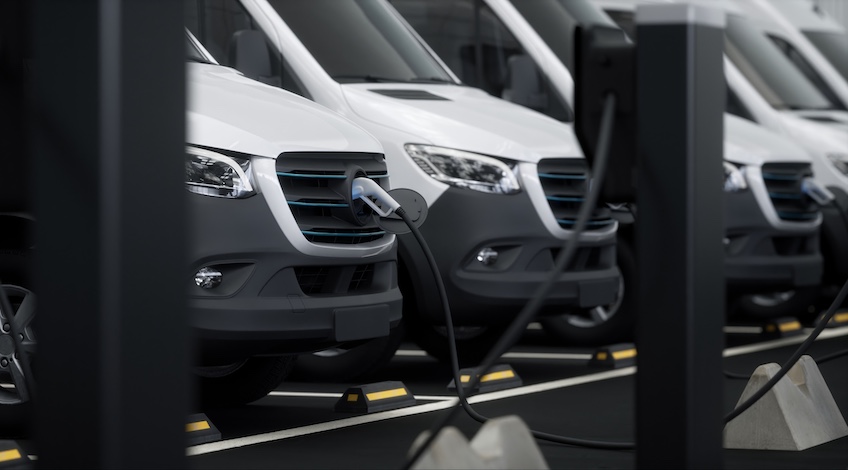
To illustrate the benefits of smart charging infrastructure, consider a hypothetical delivery fleet with 200 electric vans. If all vehicles are charged when they return to base, this creates a surge in demand at one of the most expensive and carbon-intensive times of the day.
With smart charging, the fleet can stagger charging sessions across the night – and therefore avoid costly peak charging times. This ensures all vans are ready for service each morning and charged at lower off-peak rates.
Key features of a smart charging system
- Load balancing: Distributing charging power across multiple vehicles to avoid exceeding site capacity
- Charging optimisation: Scheduling charging when energy is cheapest and greenest
- Energy management systems: Integrating fleet charging into wider site energy use, including on-site renewables

The cost benefits of smart EV fleet charging
The economics of EV fleet adoption are often framed around upfront purchase price and total cost of ownership, including depreciation.
However, chargers and charging infrastructure make up critical cost considerations for fleet electrification. By adopting charging solutions powered by smart software, operators can make significant savings.
Lower electricity bills
Smart charging equipment makes it possible to align energy use with off-peak electricity tariffs. By avoiding peak demand periods, fleets can cut their energy bills by a substantial margin – while still avoiding vehicle downtime.
Efficient use of energy infrastructure
On-site energy limitations can delay fleet electrification, and new grid connections can take months to secure. Load balancing makes better use of the capacity already on site, which can defer or avoid the cost of an infrastructure upgrade altogether.
Protected battery health
Charging cycles have a direct impact on EV battery longevity.
Rapid, unmanaged charging puts more strain on batteries, while controlled charging can extend usable life. For leasing companies and fleet operators focused on total cost of ownership, this translates into potentially higher residual values and reduced replacement costs.
Combined, these benefits underline why smart fleet charging solutions should be treated as a core part of any electrified fleet strategy, not an afterthought.
Impact of EV charging on the power grid
The growth of electric mobility is good news for emissions, but it brings real challenges for energy networks. The impact of EV charging on power grid stability is already being studied by regulators and operators across Europe.
Unmanaged EV fleet charging risks creating localised spikes in demand. This can drive up grid costs, increase carbon intensity (since peak demand is often met with fossil fuels), and even cause supply issues.
How smart fleet charging supports grid stability
Smart charging addresses these risks by smoothing demand. Instead of hundreds of EVs charging at once, energy management systems stagger usage and align it with grid capacity. They can automatically schedule charging to increase efficiency and meet demand with clean energy supply.
Looking ahead, vehicle-to-grid (V2G) technology could strengthen the relationship between EV fleet operators and the energy sector.
In practice, exporting stored energy back to the grid during peak periods could balance demand and supply while creating a new revenue opportunity. Although still emerging, V2G technology carries the potential to turn parked EVs into energy assets.

Building a future-ready fleet charging strategy
For fleet managers, the shift to smart charging is a competitive priority that can be actioned today. The following steps can help build a future-ready charging strategy:
- Work with energy and infrastructure partners: Understand local grid constraints, negotiate tailored tariffs, and consider renewable energy.
- Invest in smart charging software: Use platforms that facilitate real-time cost visibility through charging session scheduling, monitoring and reporting.
- Optimise load management: Balance demand across charging stations to maximise capacity and efficiency and reduce the need for upgrades.
- Embed sustainability metrics: Measure the impact of smart charging on emissions and energy use to support wider ESG reporting.
- Plan for future growth: Build fleet charging solutions that can scale and adapt as vehicle numbers increase.
These proactive steps can help businesses to reduce costs and create flexible, scalable infrastructure for the future of EV fleet charging.
Smart EV fleet charging: The road ahead
The case for smart EV fleet charging is clear. Across the UK and Europe, it offers a practical way to cut costs and reduce environmental impact. By shifting charging away from peak demand and integrating with renewable energy, fleets can save money while supporting the wider energy system.
Fleet electrification represents a step towards a more connected, sustainable transport future. With innovations like vehicle-to-grid on the horizon, fleets that adopt smart charging now will be best placed to guide others in the years ahead.
Cox Automotive Europe provides the latest EV news and insights. For more practical advice on topics like battery technology and total cost of ownership for fleets, visit our EV Hub for further insights.
Smart EV fleet charging FAQs
How does smart charging reduce fleet operating costs?
By charging during off-peak hours, fleets benefit from cheaper electricity rates and avoid expensive grid upgrades. EV smart charging also helps balance load across multiple vehicles, which can significantly cut costs.
What is the impact of EV charging on the power grid?
Unmanaged EV charging can increase peak demand and cause strain on the grid. Smart charging, however, helps smooth energy usage and support renewable energy integration, allowing for a stable and sustainable power network.
How does smart charging support battery health and vehicle lifespan?
Smart charging reduces thermal stress and prevents overcharging, which can promote long-term battery health and fleet reliability. These controlled systems optimise charging speed and monitor state of health automatically.
What role does vehicle-to-grid (V2G) play in EV smart charging?
Vehicle-to-grid (V2G) technology allows electric vehicles to return stored energy to the grid. For fleet operators, this generates new revenue streams while supporting grid resilience. It effectively turns parked vehicles into energy assets.

EV vs. ICE: Depreciation and residual values explained
Discover how EV residual values compare with ICE, what’s driving the shift and what this means for the industry.
How sustainable materials are shaping EV production and cutting emissions
Learn how recycled plastics, bio composites and lightweight alloys are driving sustainable manufacturing.