EV grants and incentives UK: Your guide to savings (2026 update)
Drivers making the switch from petrol or diesel to electric vehicles (EVs) can apply for various financial incentives. These are provided by employers and the UK government and aim to help lower the costs of purchasing, charging and owning an electric car.
This guide outlines the latest news on UK EV grants available in 2026/27.
Electric vehicles (EVs) are growing in popularity thanks to their lower emissions and running costs. There are already more than 2.1 million EVs on the roads, and this figure is rapidly increasing.
To support this transition, a range of EV grants and financial incentives are available to help cut ownership costs, including towards purchase price and home charger installation. EV drivers in the UK can save thousands with EV grants and incentives in 2026/27.
However, the incentives offered can change regularly. In this guide, we explain the UK electric vehicle incentives and grants currently available, plus eligibility requirements and how to apply.
Jump to section
- Government EV grants:
- EV company car tax incentives:
- Local schemes for EV drivers
- Workplace charging

Government EV grants
The UK government offers EV grants that make both buying an electric vehicle and charging it at home more affordable. Here's what's available in 2026:
Electric Car Grant
Government support for EVs includes the Electric Car Grant (ECG). It aims to encourage drivers to choose EVs by lowering purchase prices. Here’s what you should know:
- It opened in July 2025 and will run until 31 March 2030.
- Discounts are available on approved cars priced at or below £37,000.
- The discount applies whether you buy the car outright, finance it through HP, PCP or personal loan, lease it, or get it through salary sacrifice.
Eligible vehicles are split into two discount bands. These include:
- Band 1 vehicles: Maximum discount of £3,750
- Band 2 vehicles: Maximum discount of £1,500
- You don’t need to apply for the Electric Car Grant yourself. The dealer handles and deducts the discount, which is then automatically applied to the purchase price. Under this scheme, drivers buying new EVs benefit from lower upfront costs without the paperwork.
EV charger grants UK
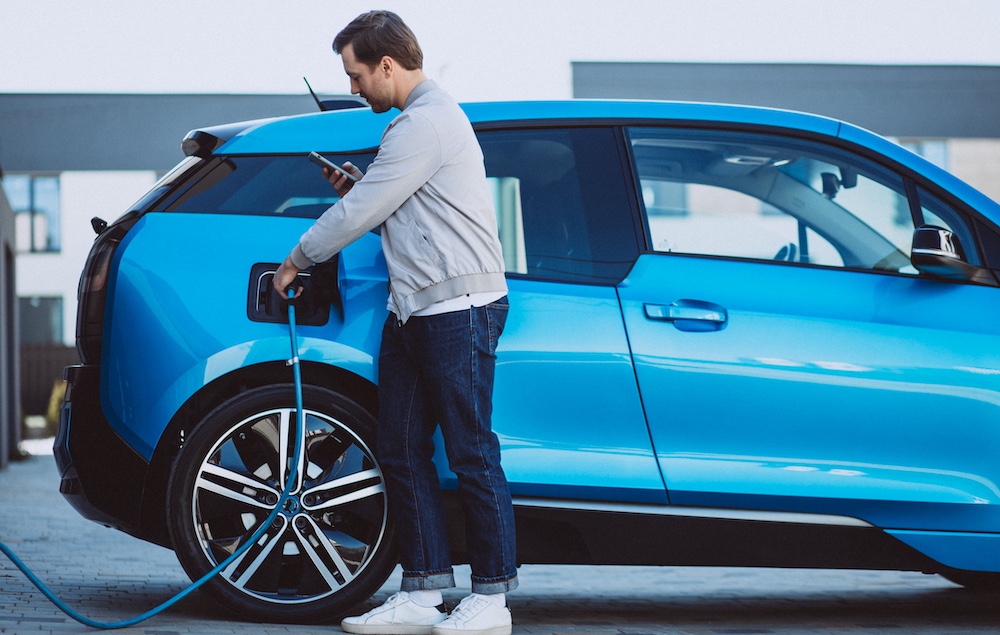
Home charging remains the cheapest and easiest way to power an EV, and the UK government offers various forms of support to help make it even more affordable.
For drivers looking to save on long-term EV ownership costs, charging at home is the way forward. Until 31 March 2027, EV charger grants are available for:
- Flat owners and renters: If you own and live in your flat or rent and live in a residential property, you could get 75% off the cost of buying and installing a charging socket, up to £500.
- Residential landlords: If you’re a landlord, you can get grants for up to 200 sockets per year. This scheme provides 75% off the cost of installing and purchasing chargers at residential properties, up to £500 per socket.
- Households with on-street parking: If you own or rent your home, you could save 75% on the cost of buying and installing a cross-pavement charging solution, such as a cable channel. The maximum discount is £500.
If you’re eligible, you will need to get in touch with an OZEV-authorised installer to finalise a quote. Make sure to check the application process if you rent your home, as you will need to provide extra documents.
Company car tax benefits and EV incentives
Employers may also offer a range of UK electric vehicle incentives that significantly lower total cost of ownership. These include:
Benefit-in-Kind EV tax incentives
Benefit-in-Kind (BiK) tax applies to EV drivers who drive a company car or get their vehicle through a salary sacrifice scheme. The amount of tax paid is based on the vehicle’s value and carbon dioxide (CO2) emissions.
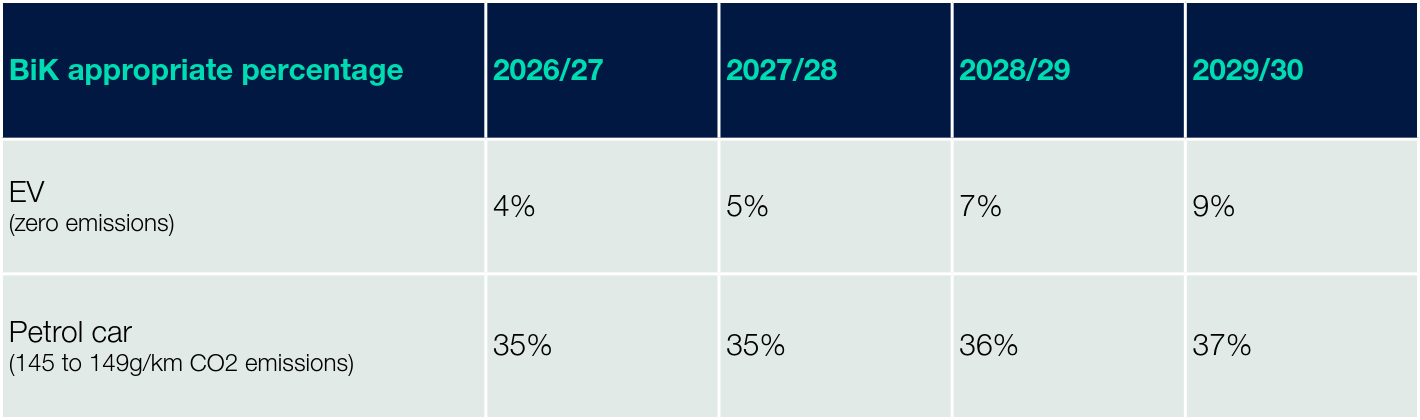
Petrol and diesel company cars are generally subject to BiK rates ranging from 16% to 37% BiK in 2026. Meanwhile, emissions-free vehicles are taxed at just 4% BiK, rising gradually to 9% in 2029/30. This lower rate can save company car users thousands of pounds per year compared to ICE equivalents.
The average petrol car emits around 142 grams of CO2 per kilometre (g/km). Based on a car emitting 145-149g/km, this table reflects the incrementally rising BiK rates for petrol cars vs. EVs, which remain significantly lower:
Salary sacrifice schemes
Salary sacrifice schemes provide another route to EV savings. Under these employee car ownership schemes, lease payments are deducted from gross salary. That means eligible employees can reduce the amount of Income Tax and National Insurance they pay, while benefitting from using an EV.
Additionally, salary sacrifice schemes can save you money on more than just EV purchase price and taxes. Other ownership costs covered depend on each bundle and provider, but salary sacrifice plans may include servicing, tyres, breakdown cover and insurance.
The savings also directly depend on the vehicle you choose, with higher-value EVs and the relevant BiK rates affecting the overall cost.
Local schemes for EV drivers
Many local councils offer incentives that provide further savings for drivers, and these can be used in conjunction with EV grants. These vary according to location: higher regional EV adoption rates may correlate with greater local scheme availability.
Clean Air Zones & EV incentives
Several cities in the UK have Clean Air Zones (CAZs) in place. While many of these only charge fees for high-emission commercial vehicles, Birmingham and Bristol also charge non-compliant passenger cars within certain areas.
Electric cars generally meet emissions standards required to avoid CAZ charges, offering significant savings for regular drivers. For example, if you commute through Bristol’s CAZ – where the daily charge is £9 – driving an EV could save you at least £45 per week.
ULEZ exemptions
London’s Ultra Low Emission Zone (ULEZ) operates 24 hours a day, seven days a week. Drivers living and commuting in London must meet basic emissions standards to travel within the zone. Non-compliant vehicles must pay a daily charge of £12.50.
Electric vehicles are automatically exempt, since they emit zero emissions. Likewise, petrol cars meeting Euro 4 standards are also exempt, as are diesel cars meeting Euro 6. For the latest updates on these regulations, read our guide to Euro 7.
Congestion charge discounts
From 2 January 2026, new Congestion Charge discounts were introduced. In addition to discounts for Blue Badge holders and residents, EV drivers can benefit from the Cleaner Vehicle Discount:
- 25% off for electric cars
- 50% off for electric vans, quadricycles and HGVs
To receive the Cleaner Vehicle Discount, your EV must be Auto Pay registered. The discount is then applied automatically.
Other UK electric vehicle incentives
Depending on where you live, other UK incentives include:
- Free or discounted public parking
- Discounted resident parking permits
- Reduced toll charges
In some areas, local authorities may offer EV drivers permission to use bus lanes (they may be marked as bus/ULEV lanes). Check online with your local council to see a full list of local EV perks in your area.
Workplace charging
The Workplace Charging Scheme is available until 31 March 2027. It funds EV charger purchase and installation for businesses, charities and public sector organisations that meet eligibility criteria.
These EV charger grants are paid directly to the installer on behalf of the applicant. The limit rose as of 1 April 2026, increasing from £350 to £500 per socket. The Workplace Charging Scheme now covers:
- Up to 75% of relevant costs
- A maximum of £500 per socket
- Up to 40 sockets per site
Employers may then choose to offer discounted or free workplace charging, creating even more electric vehicle incentives for staff in the UK.

How to save more with EV grants in 2026/27
Combining multiple EV grants and incentives can help you maximise total savings.
Bigger savings can come from different routes. For instance, you could lease an EV through employee car ownership schemes and feel the benefits of lower running costs. Add EV charger grants and local exemptions, and your overall EV ownership costs could drop substantially.
Always check your eligibility criteria and application deadlines, as many EV grants and incentives have fixed end dates.
EV grants and incentives: Looking ahead
A wide range of EV grants and incentives exist in the UK, making switching to electric more appealing and affordable. From salary sacrifice schemes to EV charger grants, there are several ways to streamline the transition.
By combining tax incentives, government schemes and regional benefits, drivers can make substantial EV savings and lower long-term ownership costs.
For more guidance on choosing, charging and running an electric car, visit the Cox Automotive Europe EV Hub.
FAQs: EV grants and incentives UK
What EV grants are available in the UK?
Electric vehicle grants in the UK include:
- Electric Car Grant
- EV charger grants
- Workplace Charging Scheme
Drivers may also be eligible for the following UK electric vehicle incentives:
- Benefit-in-Kind (BiK) EV tax incentives
- Congestion Charge Cleaner Vehicle Discount
- Local EV incentives
- Salary sacrifice schemes
- ULEZ exemptions
Do I need to apply for the Electric Car Grant?
No. Eligible dealers apply the discount automatically at the point of sale. This means it will already be reflected in the price displayed on the vehicle listing
How can I save on EVs via tax?
Company car drivers benefit from a low 4% BiK tax rate, rising gradually to 9% by 2029. Salary sacrifice schemes can further reduce Income Tax and National Insurance, giving employees direct access to an EV through their employer.
Are there local EV incentives available to drivers?
Yes. Exemptions from Clean Air Zones and Congestion Charges can increase EV savings.
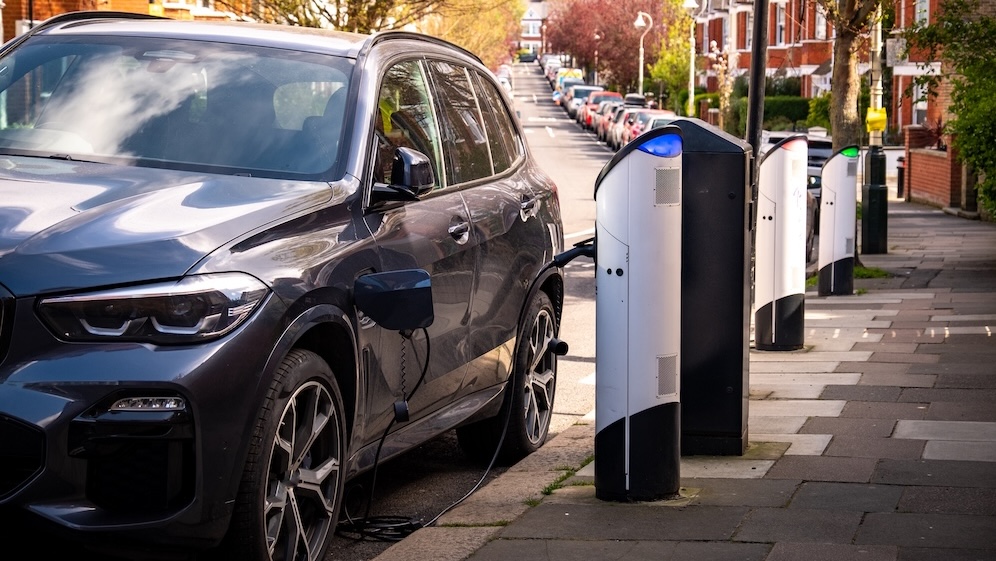
Homeowners and renters without off-street parking may also benefit from local, on-street chargers thanks to Local Electric Vehicle Infrastructure (LEVI) funding. This provides grants to eligible local authorities to support the cost of installing on-street chargers.
When will EV Congestion Charge exemptions end?
The 100% Cleaner Vehicle Discount ended on 25 December 2025. EVs registered for Transport for London’s Auto Pay now get a reduced daily fee.
From 2 January 2026 onwards, the standard Congestion Charge is £18. Low-emission vehicles qualify for exemptions with the following Congestion Charge discounts:
- Electric cars: 25% discount, lowering the daily charge to £13.50
- Electric vans, HGVs and quadricycles: 50% discount, lowering the daily charge to £9
The discount is changing. From 4 March 2030, electric cars will get a 12.5% discount, while electric vans, HGVs and quadricycles will get 25% off.

EV car insurance: Costs, coverage, and tips for UK buyers
Find out how EV insurance impacts your overall cost of EV ownership.
Electric vehicle costs: What to expect over 5 years
A breakdown of all the associated costs and potential savings associated with an EV.