EV trends 2026 – Industry predictions shaping the future of electric vehicles
EV trends 2026 focus on balancing policy with commercial discipline. Growth is expected to continue across the UK and Europe, but the market will be increasingly shaped by regulation, fleet-led demand, pricing pressures and the need for sustainable scale.
After years of accelerated growth, EV demand continued to progress in 2025, largely due to fleet-driven electrification, but uptake remained uneven across channels and regions. Additionally, pricing pressures intensified and residual value sensitivity reshaped risk across the supply chain.
Looking ahead, the electric vehicle market outlook 2026 is led by sustainable execution, rather than rapid production. OEMs face ongoing supply-chain constraints and tighter UK ZEV mandate requirements, despite softening regulations in Europe. Retailers and fleets face the challenge of navigating volatile EV residual values, evolving incentives and cautious buyer confidence. At the same time, continued investment in EV charging infrastructure, battery technology improvements and grid-readiness investment help support longer-term growth.
Together, these dynamics underpin the EV industry trends 2026. In this article, we’ll look at these predictions in more detail, providing a view of what the future of EVs in 2026 looks like for manufacturers, retailers and fleet operators across the UK and Europe.
For a consumer-led analysis of the EV market, read our 2026 UK EV adoption & perceptions report.

Electric vehicle market outlook 2026 is built on pressure, progress and policy
The electric vehicle market outlook 2026 indicates more progress, despite facing sustained commercial and regulatory pressure. Growth in the BEV market is expected to continue, with momentum remaining slower than in earlier phases of adoption, and shaped by policy, fleet demand and pricing discipline rather than consumer sentiment.
Thanks to corporate decarbonisation targets, benefit-in-kind incentives and regulatory compliance, EV demand will remain predominantly fleet-led across the UK and Europe, with private adoption remaining more fragile. Influenced by EV pricing pressures, residual value concerns and uncertainty around long-term running costs. This imbalance is defining key EV market challenges in 2026.
Channels aren’t the only factors of the market out of balance; regional divergence is also prominent. Recent policy reforms in Europe have eased some CO2 compliance requirements, introducing greater flexibility for manufacturers when it comes to meeting long-term goals. These changes are welcomed by the industry thanks to reducing short-term pressure on production volumes, but they may also impact the pace of adoption in certain segments.
In the UK, EV adoption has continued to grow year-on-year but remains disproportionately fleet-led. Private demand lags, and future EV taxation adds further complexity to purchase decisions. As a result, the future of EVs in 2026 will be shaped by how effectively the industry aligns policy ambition with real-world demand, pricing realities and channel mix.
Fleet-driven electrification moves from ‘volume driver’ to the ‘backbone of EV growth’
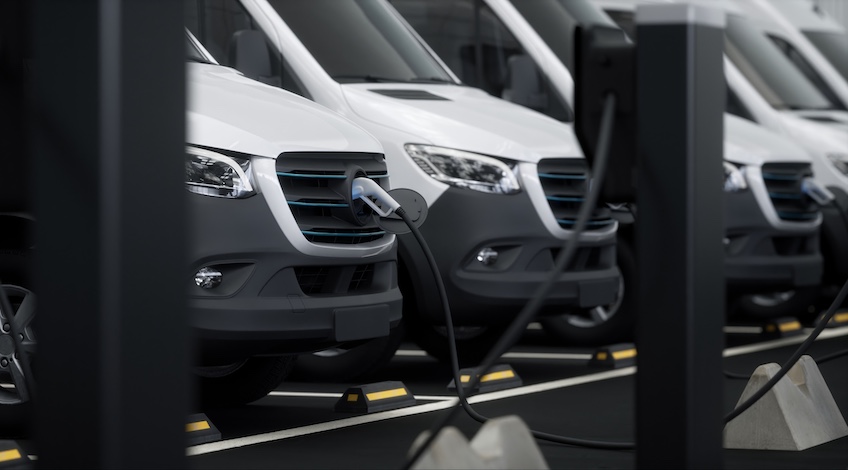
As the EV market enters 2026, fleet-driven electrification is more than a demand trend - it’s become the structural backbone. EV fleets provide volume stability, helping OEMs, and retailers maintain momentum while private adoption remains slow.
This is largely driven by leasing companies, rental operators and corporate fleets who are accelerating electrification to meet emissions targets, manage long-term costs and future-proof their strategies. As a result, fleet orders are dominating a growing share of EV production, offsetting weaker private-buyer uptake.
Fleet-driven electrification has important implications for the wider industry:
- OEMs are naturally tailoring EV portfolios around fleet suitability over consumer-led features to drive sales and meet targets.
- Retailers benefit from a steadier pipeline of nearly new EVs entering the used market.
- Fleets play a critical role in shaping EV residual value performance through defleeting strategies, battery transparency and accurate vehicle condition data.
Fleet-driven electrification will remain central to market growth in 2026. However, it does not replace the need for stronger private demand. Instead, it provides the structural backbone needed for the EV market to progress through policy pressure, pricing adjustment and evolving buyer confidence.

EV residual values and pricing pressures remain decisive in 2026
While some stabilisation has emerged in 2025, EV residual values remain one of the most decisive factors shaping the electric vehicle market outlook 2026. Used EV values continue to be more sensitive than ICE equivalents, influenced by rapid technology cycles, shifting incentives and uneven demand across segments.
Looking at Europe, residual value pressure remains as higher volumes of leased EVs return to the market and private demand struggles to absorb the growing supply. In the UK, however, conditions are slightly more supportive, with early signs of stabilisation in certain models, yet pricing remains fragile and model dependent. This dynamic reinforces EV pricing pressures as a core EV market challenge in 2026.
Policy also plays a role in residual values, thanks to incentive structures, compliance-driven registrations and tactical channel prioritisation supporting short-term volumes, while driving supply and demand volatility.
As a key driver of depreciation rates, battery transparency is also a critical factor. Clearer insight into battery health, degradation and warranty coverage are essential for narrowing the confidence gap clear in our 2026 EV adoption and perceptions report. Without reliable battery data, drivers continue to see EVs as a risk, directly impacting pricing, leasing assumptions and buyer appetite.
Heading into 2026, models with strong demand profiles, transparent battery reporting and manufacturer-backed support are better positioned to retain value. As a result, pricing discipline, data-led valuation and selective stocking strategies will be critical as the industry works toward a more investable EV market.

EV charging infrastructure growth leads to a grid readiness focus
Our 2026 EV adoption and perceptions report highlights charging availability as primary constraint when it comes to EV adoption in the UK. Slowly but surely, that narrative is changing – particularly as exposure to electric vehicles increases, and EV charging infrastructure investment expands. Now, the industry conversation isn’t about if chargers exist, but how reliably and efficiently they can be integrated into the energy system.
As charging infrastructure moves in a positive direction across the UK and Europe, EV grid readiness is emerging as the next structural challenge. Grid capacity, connection times and local power constraints are increasingly shaping where and how charging can scale.
- For fleets this means depot electrification becomes an energy-planning exercise. Smart charging, load balancing and coordination with network operators are now key operational considerations.
- For OEMs and retailers, it reinforces the importance of aligning
vehicle propositions with real-world charging and energy realities.
Markets that align public charging acceleration with grid investment and flexibility will gain a clear advantage in supporting long-term EV growth.
EV manufacturing and supply chains adapt for scale, not speed
Going into 2026, EV manufacturing strategy shifts from rapid expansion to how sustainably OEMs can scale. Following years of accelerated investment, balancing cost, resilience and innovation within complex EV supply chains becomes the focus.
Regulation will continue to shape production planning, but the future of EV competitiveness will depend on building vehicles that are commercially smart. Localisation and modular manufacturing platforms support this shift by encouraging scale with reduced operational complexity.
Battery technology improvements will also continue, remaining a central factor to the transition, but will shift from breakthrough chemistry, to manufacturability, recyclability and reducing long-term costs.
OEMs that effectively balance localisation with cost discipline and sustainable battery supply, while managing risk will be better positioned for long-term competitiveness.

What do these EV predictions mean for the automotive industry in 2026 and beyond?
For the industry then, these EV predictions 2026 point to a year defined by discipline, strategic recalibration and policy. Before, the goal was primarily to prove that electrification is possible, but now it’s about proving it can be delivered sustainably, profitably and at scale. Progress will continue, while remaining uneven and shaped by policy pressure, fleet-led demand, pricing and the how quickly infrastructure, manufacturing and energy systems align.
Here’s how these 2026 EV predictions will impact the future of EVs for manufacturers, retailers, lenders and fleets:
- OEMs will focus on balancing compliance with competitiveness, while controlling costs and stabilising residual values.
- Retailers and lenders have the challenge of navigating EV pricing pressures, valuation risk, and driving buyer confidence through ownership education and resources.
- Fleets will increasingly act as the backbone to market stability.
In short, how scalable the next phase of electrification will become relies heavily on the how supply chain resilience, pricing, policy alignment and infrastructure readiness evolve in 2026.
To explore EV adoption in more detail, including ownership behaviour, uptake barriers and buyer sentiment, read our 2026 EV adoption & perceptions report, launching in early 2026.

2026 UK EV adoption and perceptions report
Our 2,000+ UK driver survey shows how experience is driving EV confidence and shifting purchase intent.
Maximising EV resale value: A practical checklist for retailers and fleets
From battery reports to reconditioning and presentation, this guide covers the steps that matter most to buyers.