AI in automotive: how artificial intelligence is transforming the industry


Few things are reshaping the automotive industry as quickly or as broadly as artificial intelligence (AI). As in most areas of life, AI is becoming commonplace, embedded across the value chain on factory floors, inside the vehicle, across the dealer network and throughout the aftersales chain.
The potential applications are many, enabling new levels of efficiency and insight, all with the goal of producing better vehicles, improving profitability and creating a better customer experience.
But scale of investment only tells part of the story. As discussed in our Talk Auto podcast, one of the real risks businesses face is thinking too small. The bigger opportunities can come when businesses use their data to predict outcomes, improve decisions and drive growth. The organisations getting the most from AI are embedding it into the core of their business.
This article explores how automotive artificial intelligence is being applied across the value chain today, and what the next phase of that transformation looks like.
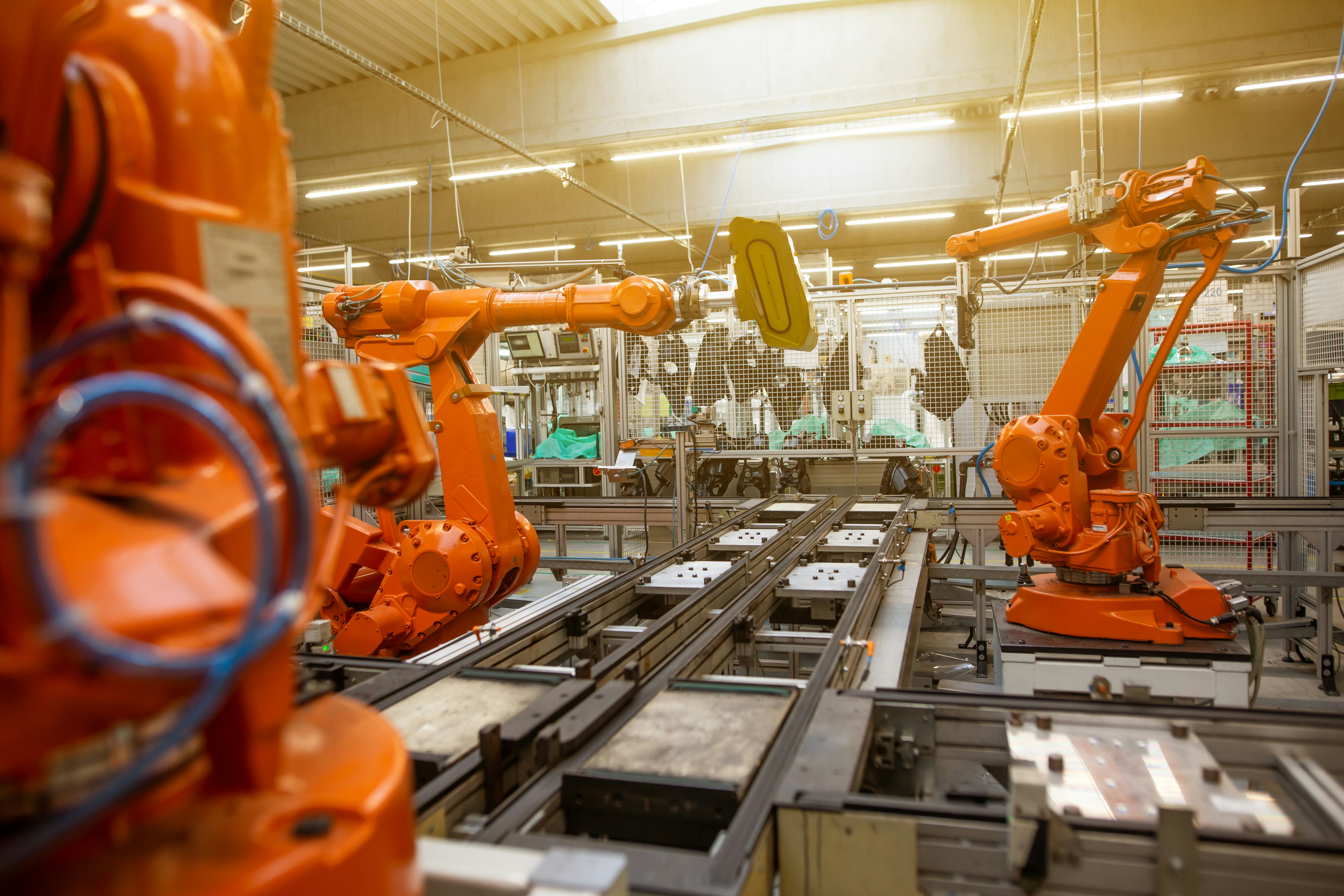
How AI is transforming the automotive industry
The impact of AI is evident across every stage of the vehicle lifecycle, enabling better decisions, faster processes and more personalised experiences.
The core application areas include:
- Vehicle development – accelerated simulation and design iteration
- Manufacturing – computer vision quality inspection, digital twins and supply chain planning
- Vehicle systems – advanced driver assistance, autonomous driving and in-car personalisation
- Retailer operations – driving back-office efficiencies and automating processes
- Retail and customer experience – smarter inventory management, dynamic pricing and automated customer engagement
- Aftersales and maintenance – AI-driven diagnostics and predictive service scheduling
This is all made possible because of the data and analytics available today. Modern operations and vehicles generate enormous volumes of data, and the ability to collect, process and act on that data using AI could be genuinely transformative for the automotive industry. Software-defined vehicles, where functionality is delivered and updated through software rather than hardware, are making this data layer richer still.
AI in automotive manufacturing: improving efficiency and quality
AI in automotive manufacturing is already delivering measurable results across production planning, quality control and supply chain management, enabling more predictive processes.
- Computer vision systems are increasingly used for quality inspection on production lines, identifying defects in components and assemblies with a consistency and speed that human inspection cannot match. In these applications, AI is cutting evaluation times in R&D simulation from days to minutes.
- Digital twins – virtual replicas of physical production systems – allow manufacturers to model process changes, test scenarios and identify bottlenecks before they appear on the factory floor. OEMs and Tier 1 suppliers are deploying the technology to simulate new model introductions, optimise robotic workflows and support workforce training on complex assembly tasks.
- Supply chain planning is another area where predictive analytics is helping manufacturers model disruption scenarios and anticipate component shortages – a capability that has become considerably more important since the supply chain upheaval of the early 2020s.
The OEM software challenge is significant here too. As discussed on Talk Auto, car companies will effectively need to choose whether to build, buy or borrow AI and software capability. Those who move fastest could see advantages for many years to come.
AI in vehicles: from ADAS to autonomous driving
AI is revolutionising in-vehicle systems too. Modern advanced driver assistance systems (ADAS) depend on AI to process continuous data streams from cameras, radar, LiDAR and ultrasonic sensors to detect hazards, monitor lane position, manage adaptive cruise control and trigger emergency braking in real time. Computer vision sits at the heart of these systems, interpreting the vehicle's environment faster and more accurately than any human could.
These systems are crucial for the autonomous vehicle movement which has become more prevalent in recent years. Waymo is already operating fully autonomous robotaxis commercially in multiple US cities, demonstrating that the technology is ready for the real world, even if full mainstream adoption remains some way off.
Beyond safety systems, AI is reshaping the in-vehicle experience. Software-defined vehicles are enabling manufacturers to deliver personalisation and new functionality via over-the-air (OTA) updates after the point of sale.
The broader implication is the shift toward a "smartphone on wheels" model, where consumers increasingly care more about the software experience and connected services than the vehicle brand itself. For OEMs with deep heritage in mechanical engineering, this is proving to be a strategic and technical challenge.
Brand loyalty in the EV segment is already weaker than in ICE, with emerging Chinese manufacturers perceived by many buyers as technologically ahead and competitively priced.
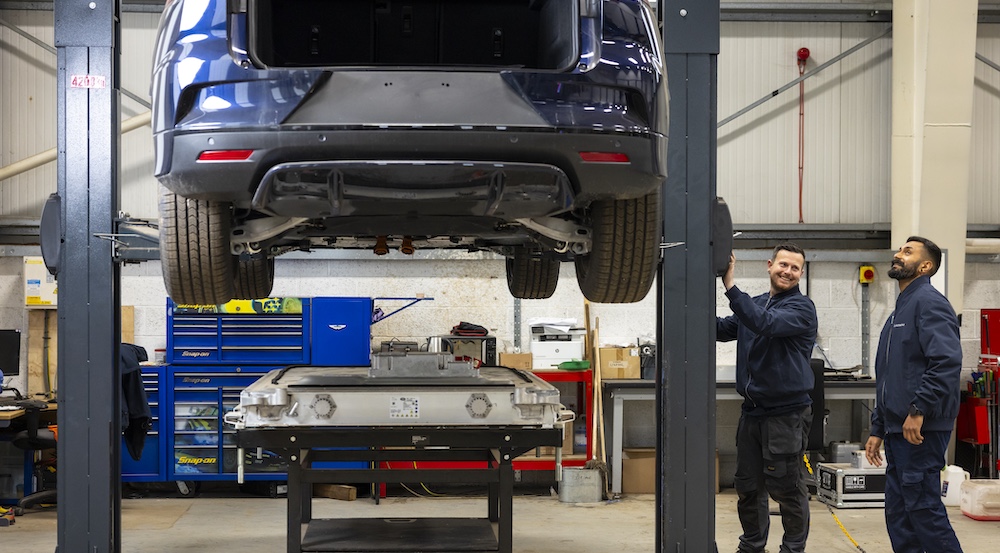
Predictive maintenance: how AI is improving vehicle reliability
For fleet operators and aftersales businesses, predictive maintenance is one of AI's most commercially significant applications. Rather than servicing on a fixed schedule or waiting for faults to appear, AI-powered systems analyse data from connected vehicles in real time and identify early warning signs of component failure before they worsen.
Organisations deploying predictive maintenance systems report a huge reduction in unplanned downtime and much lower maintenance costs.
Rolls-Royce is a benchmark for this model beyond automotive, predicting engine failures and selling flying hours rather than engines. The same logic is beginning to apply to fleet vehicles.
AI in automotive retail: transforming the customer experience
AI in automotive retail has many potential applications such as inventory management, pricing, customer engagement and lead handling.
- Inventory management — AI platforms analyse sales velocity, local market trends and demand to help dealers stock the right vehicles at the right time.
- Dynamic pricing — AI pricing tools adjust vehicle prices in response to real-time market conditions, competitor activity and seasonal demand.
- Lead management — AI scores and prioritises leads by purchase intent, allowing sales teams to focus effort where it is most likely to convert.
- Customer engagement — AI chatbots and virtual assistants handle initial enquiries around the clock, reducing routine workload for sales staff and improving response times.
Adoption is still uneven. A 2025 Cox Automotive study in the US found that just 15% of retailers had embedded AI into their businesses. However ,the same study showed that 63% retailers believe AI is critical to their long-term success.
The future of AI in automotive
AI in automotive is not a distant trend. It’s here today, playing out across manufacturing lines, vehicle systems, service garages and dealerships simultaneously.
The pace of adoption is rapid and will have far-reaching impacts on our industry. Not least on the job sector. The IMF has projected that around 40% of jobs will be exposed to AI, however this is likely to be a shift in skills and responsibilities rather than a net loss. Routine and task-heavy work will be automated, presenting an opportunity to redirect that capacity toward higher-value, more strategic activity.
AI works best when it is applied to real business problems, not deployed for its own sake. Start with the outcome you need – for example: faster stock turn, lower cost per repair, better lead conversion – and work backwards to the data and tools required to get there. That framing, rather than a standalone AI strategy that sits in a silo, is where the genuine returns are.
Explore further insights on emerging technologies and industry trends through our insights hub.
AI in Automotive FAQs
How is AI used in the automotive industry?
AI operates across the full automotive value chain. In manufacturing, it powers quality inspection, digital twin modelling and supply chain optimisation. In vehicles, it underpins ADAS and autonomous driving development. In aftersales, it enables predictive maintenance through connected vehicle data. In retail, it supports inventory management, dynamic pricing and customer engagement.
What role does AI play in autonomous vehicles?
AI processes continuous data from cameras, radar and LiDAR to interpret the driving environment and make real-time decisions. Driverless robotaxis are operating in multiple US cities, but mass adoption is some way off.
How does predictive maintenance work in automotive?
AI analyses data from connected vehicle sensors to identify patterns associated with wear or impending failure, flagging issues before breakdowns occur. Rather than servicing on a fixed schedule, operators receive early warnings that reduce downtime and lower maintenance costs.
How will AI shape the future of the automotive industry?
Software-defined vehicles will make AI central to how cars are designed, operated and monetised, with OTA updates, personalisation and data-enabled services generating post-sale revenue. For businesses across the sector, those applying AI most purposefully, to real problems with strong data behind them, will be best placed to benefit.