Automotive industry trends 2026: Predictions for the year ahead


The key automotive industry trends shaping 2026 across the UK and Europe include accelerated electrification, digital transformation, retail evolution, used-car market shifts, and emerging energy ecosystems.
What’s driving automotive trends in 2026?
In the UK, 2025 has brought some stabilisation across the automotive sector, following years of disruption. Now in Q4, the UK’s new car market is expected to continue its recovery trajectory, as used car supply stabilises – reflecting broader used vehicle supply and demand dynamics - and EV adoption grows steadily YoY.
At the same time, European markets are gradually regaining momentum, with production consistency improvements, R&D investment and electrification, yet regional disparities remain.
Looking ahead to the automotive industry trends of 2026, growth, digitalisation and the energy transition will continue to shape the next 12-months across both markets. In this article, we’ll break down the automotive future trends for 2026 and beyond, including manufacturing, technology, retail and EV adoption.
Automotive manufacturing trends 2026 – Building for a greener, smarter future
2025 marked a year of transition for both the UK and European automotive manufacturing sector, as OEMs and suppliers focused on preparing for a more electrified and digitally enabled future. Undertaking major plant retooling for EV production while facing persistent component shortages, cost pressures, and inconsistent demand.
Key 2026 automotive manufacturing trends will depend on how effectively this groundwork translates into competitiveness, innovation and growth over the next 12 months.
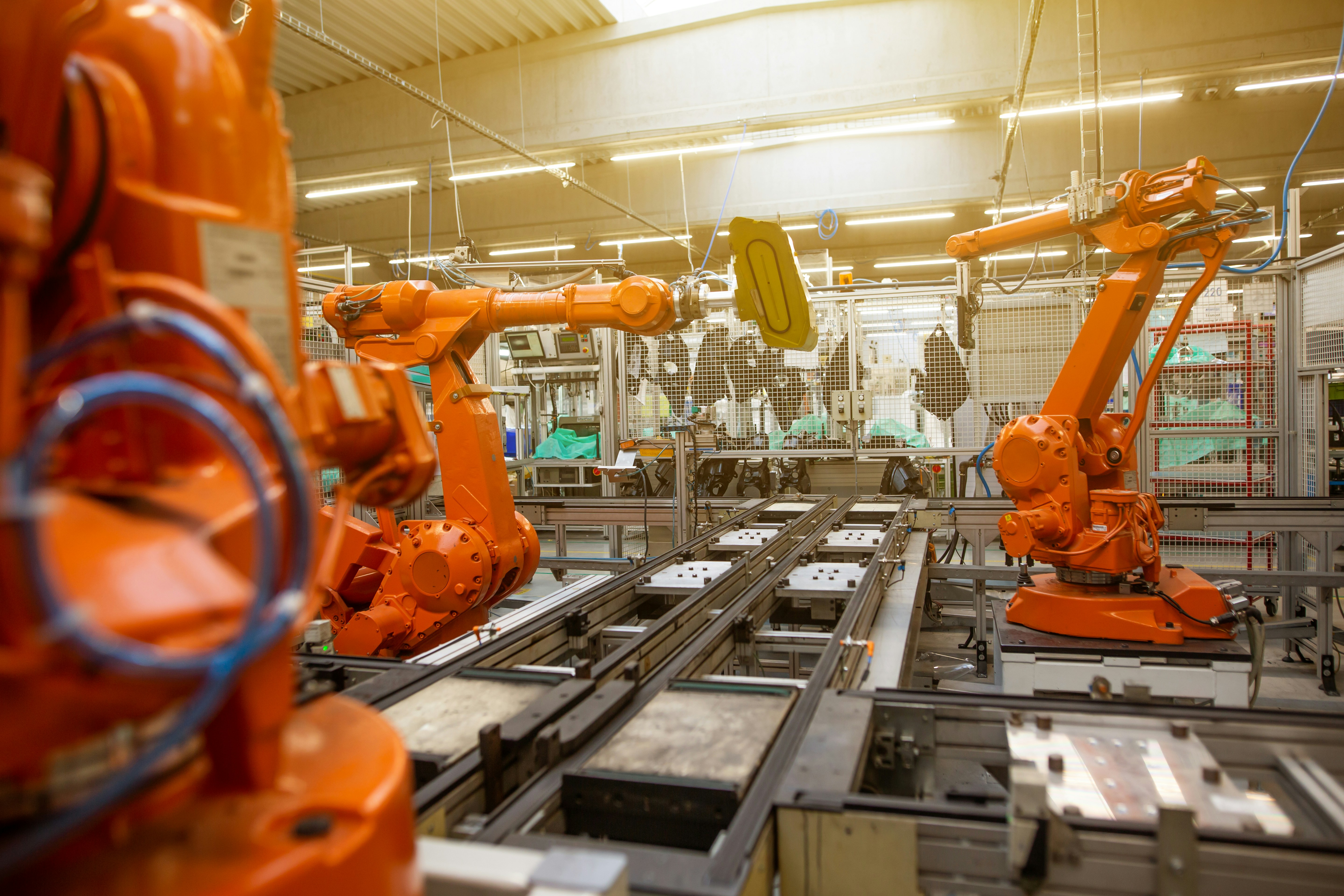
Automotive manufacturing trends in 2026:
- Sustainable supply chains become a defining competitive advantage
- Software-led production redefines operations
- Workforce transformation accelerates to meet automation and EV demand
1. Sustainable supply chains become a defining competitive advantage
Sustainability is at the heart of strategies in 2026. No longer a compliance exercise but a competitive lever, tightening ESG regulations drive mandatory carbon reporting across the automotive manufacturing supply chain, while battery passport standards force traceability of materials, chemicals and embedded emissions.
As automotive sustainability trends mature then, supply-chain emissions, regionalised battery production and a circular material economy have become critical. In 2026, OEM electrification strategies will focus on expanding regional battery localisation and implementing new recycling or material remanufacturing partnerships to gain long-term resilience.
2. Software-led production redefines operations
Manufacturers across the UK and Europe will continue their evolution into software-defined factories throughout 2026. AI, machine learning and real-time analytics will continue to optimise quality and efficiency.
This shift sits at the heart of automotive manufacturing trends in 2026, accelerating automotive AI adoption across the sector. Enabling broader use of digital twins - ultra-detailed virtual replicas of real-world systems – for testing, optimising and troubleshooting, plus predictive maintenance and automated inspection systems.
3. Workforce transformation accelerates to meet automation and EV demand
With electrification and digitalisation reshaping the automotive manufacturing landscape at pace, the workforce finds itself experiencing shortages in the high-voltage engineering, robotics and software skills required to keep up.
2026 will see manufacturers across the UK and Europe continue to invest in upskilling and automation, while redesigning production roles to blend mechanical expertise with digital literacy.
Digital and technology trends in the automotive industry 2026 – AI and automation become the norm
Digital-first strategies progressed significantly in 2025. Manufactures ramped up AI-driven engineering and cloud-connected vehicle platforms, while retailers and fleets continued to shift toward data-led decision making, predictive maintenance and automated customer experiences.
Connected car trends also increased across Europe and the UK, causing new data governance requirements to come into effect. So, while industry gained richer insights, tightening cybersecurity rules and AI regulatory frameworks began shaping how businesses collect, store and monetise data.
In 2026 then, automotive digital trends will continue to accelerate. AI will be embedded across the entire vehicle lifecycle and connected mobility services will generate revenue streams in some regions. Together, these trends will redefine how OEMs build ecosystems, how retailers serve customers and how fleets operate, optimise and monetise their assets.

2026 Automotive digital trends:
- AI will power the next era of automotive intelligence
- Connected car data evolves into core revenue stream
- Mobility-as-a-service expands beyond urban centres
1. AI will power the next era of automotive intelligence
Once a support tool, automotive AI adoption is expected to become a strategic cornerstone in 2026. Supporting engineering, diagnostics, logistics, remarketing and customer experience. This marks one of the most significant AI in automotive industry trends, reshaping how the industry designs, builds, sells and operates vehicles.
- OEMs: Artificial technology will likely be deployed across design, testing and production to reduce development cycles and accelerate innovation.
- Retailers: Advanced diagnostics, CRM automation and hyper-personalised marketing will help maximise conversions, while becoming a central tool in used-vehicle pricing, residual value forecasting and stock optimisation.
- Fleet operators: Predictive analytics, automated routing and energy optimisation for EV fleets will help improve uptime and reduce total cost of ownership.
2. Connected car data evolves into a core revenue stream
Connected vehicles are already mainstream in 2025, however 2026 will see them become a core revenue driver. New EU and UK data frameworks have begun to formalise how vehicle data is shared, accessed and commercialised. While this creates compliance complexity, it also brings opportunity.
For OEMs this means utilising real-time connected car trends to expand paid digital services, from in-car apps to subscription-based vehicle functions. More retailers will use available data, predictive alerts and usage-based service triggers to improve aftersales. Finally, more fleets will monetise driving and charging data through insurer and charging network partnerships.
3. Connected mobility accelerates with Mobility-as-a-Service (MaaS)
Mobility-as-a-Service (MaaS) is the integration of public transit, on-demand services, shared vehicles and subscriptions in a single digital platform. Ultimately shifting the market from vehicle ownership to vehicle access.
Thanks to consumer demand and infrastructure investment, MaaS is expected to grow at a CAGR of 10.3% by 2034 in Europe where adoption is further along, while the UK remains in its pilot phase with adoption moving slowly.
In Europe, more OEMs and retailers will build partnerships with platform operators, and manufacturers will continue to design models specifically for high-utilisation and shared used. Meanwhile, in the UK, early movers will take part in pilot programs while using connected car data to help influence the future of MaaS.
Automotive retail trends: Remarketing, residual values and the used vehicle boom
Despite gradual improvements, used stock volumes remain below pre-pandemic levels in Q4 2025, shaping used vehicle supply and demand. This ongoing supply shortage helps keep residual values resilient, while sustaining demand for nearly new vehicles. EV residual values remain more sensitive, due to battery concerns, early-stage technology and faster depreciation, but are showing signs of stabilisation as the market matures.
Consumer expectations for transparency, convenience and flexibility on the other hand, increased rapidly. Causing digital-first buying journeys, subscription models and AI-powered support to become the norm in automotive retail. These expectations cascade into the fleet sector too. Enhanced lifecycle planning, predictive analytics, telematics reporting and EV health transparency are now essential for achieving quicker turnarounds and stronger remarketing outcomes.
Together, these indicate that automotive retail trends 2026 will be shaped by efficiency, data-informed decision-making and a fully integrated omni-channel experience.

Automotive retail trends 2026:
- The used car market stabilises as supply improves
- Digital retailing reaches full maturity
- Remarketing evolves with predictive intelligence
1. The used market stabilises as supply improves
After several years of volatility, used car market trends 2026 point towards further stabilisation – but growth will remain slow and gradual. Our 2025 Q3 used car market analysis suggests volumes will remain below pre-pandemic levels, due to the long-term impact of lost registrations in previous years. This ongoing supply imbalance helps support resilient residual values, especially in segments where supply is inconsistent.
What does this mean for the market in 2026?
- Retailers will see continued competition for high-quality, retail-ready stock
- Fleets will prioritise strategic timing for defleeting and replacement cycles to maximise profit margins
- For OEMs, it reinforces the value of used programmes
2. Digital retailing reaches full maturity
By 2026, digital automotive retail will have reached full operational maturity for most franchised networks and large dealer groups, with integrated omnichannel buying journeys as standard.
However, to meet rising expectations for transparency and convenience, 2026 will see an increase in AI chatbots, personalised purchase pathways, automated exchange valuations and instant finance approvals.
2. Remarketing evolves with predictive intelligence
Thanks to cost pressures across the vehicle lifecycle, maximising resale value is essential in 2026. Remarketing will therefore become more analytics driven and more fleets and leasing firms will adopt predictive intelligence to optimise defleet timing and price.
Tools that analyse mileage trends, utilisation data, charging patterns and maintenance history allow operators to forecast the optimal point of disposal, while choosing the most profitable channel for sale.
Energy and EV market trends 2026 – scaling electrification and energy ecosystems
Thanks to expanding charging networks, clearer regulatory frameworks and strong OEM electrification strategies, EV adoption continued to rise across Europe in 2025. The UK also saw YoY growth, but progress remained disproportionately driven by fleet channels over private buyers – a gap that becomes harder to close following the UK Autumn Budget 2025, which introduced future EV taxation due in 2028.
The Chancellor’s budget also confirmed new public charging investment and enhanced incentives for new EV purchases, supporting long-term uptake. However, they come at a time when meeting ZEV mandate targets is already challenging. As a result, OEMs and retailers must work even harder to demonstrate EV total cost of ownership advantages over ICE.
Together, these dynamics shape the EV market trends 2026 across the UK and Europe.
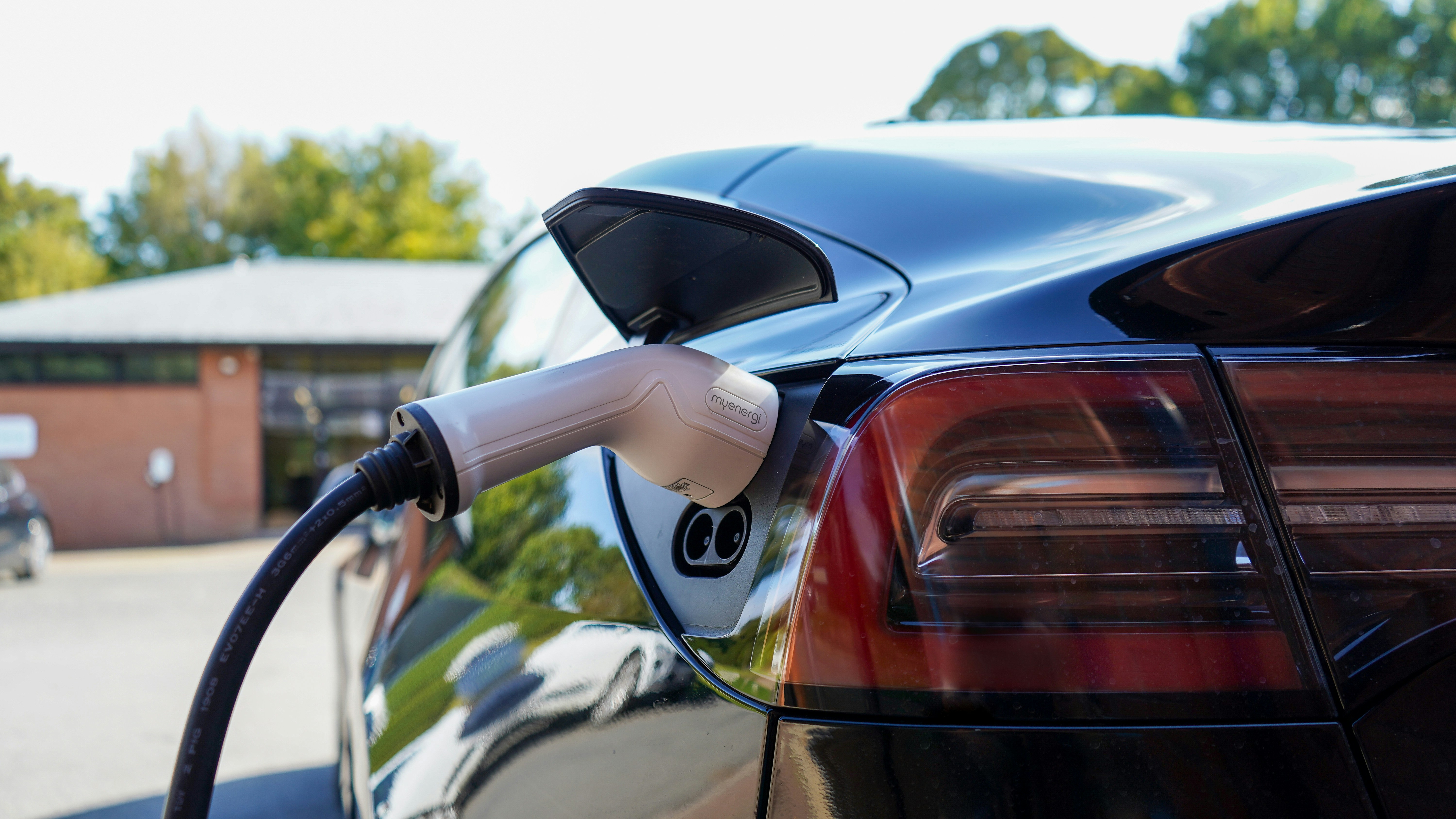
Energy and EV market trends 2026:
- EV residual values stabilise as confidence grows
- Charging infrastructure accelerates EV readiness
- Energy ecosystems evolve as OEMs and fleets enter the power market
1. EV residual values stabilise as confidence grows
Autovista data shows that in 2025, % residual value continued to decline in most major EU markets, driven by rapid model turnover, increased supply and uneven private buyer demand. The picture is slightly more positive in the UK, where used EV values showed early signs of stabilisation (yet still more volatile than ICE), supported by improving demand, stronger retail pricing performance and growing adoption of battery health reports and OEM certified used EV schemes.
However, the Autumn Budget 2025 introduces new complexities. Increased new-EV incentives will lead to more nearly new used EVs on the market in years to come, while potentially creating short-term downward pressure on today’s used EV values by causing more adopters to choose new.
Heading into 2026 then, Europe will continue to face deeper EV residual value challenges. While in the UK, stabilisation may be impacted by new policies.
2. Charging infrastructure accelerates EV readiness
Both the UK and Europe saw record growth in charging infrastructure in 2025. The UK surpassed 86,000 public charging points, with more than 17,000 rapid and ultra-rapid devices - a 23% increase YoY. Across Europe, regional disparity remains an issue despite over 1 million chargers in place by Q1 2025, working towards the 3.5 million by 2030 goal.
The UK’s Autumn Budget 2025 strengthens this momentum further, with an additional £200m charging network investment, alongside 100% business-rates relief for new charging sites over the next decade. Strengthening charging accessibility helps to remove one of the biggest barriers to EV adoption: confidence in convenient, reliable charging.
3. Energy ecosystems evolve as OEMs and fleets enter the power market
EV adoption is part of a larger shift towards a cleaner, smarter and more integrated energy ecosystem. This trend is expected to accelerate in 2026, as OEMs and fleets begin participating more actively in the power market.
For OEMs, this includes expanding into charging subscriptions, bundled electricity tariffs and home-energy management platforms, creating new recurring revenue streams and strengthening long-term customer relationships. Europe is already making moves in the energy ecosystem, with adoption slower in the UK. However, growth is expected in both markets in 2026.
In the fleet industry, investment in behind-the-metre (BTM) storage, depot solar PV, intelligent charging and load balancing software, will increase as part of broader fleet electrification and energy management strategies. These tools help reduce peak-time electricity costs, while in parts of Europe, they allow participation in flexibility markets through controlled charging or energy export. Similar mechanisms are expected to become available in the UK as regulatory reforms progress, positioning fleets to earn energy-market revenue as well as reducing operating costs.
What do these automotive industry trends mean for 2026 and beyond?
These automotive industry trends 2026 point to a year defined by accelerated electrification, intelligent manufacturing, digital maturity and a more integrated energy ecosystem.
Similar challenges will remain across the UK and Europe, from technology adoption to regulatory pressures and sustainability demands. However, market trajectories continue to differ in key areas such as private EV uptake, residual values and policy influence.
Success for OEMs will depend on delivering competitive EV portfolios, scaling software-led production and monetising new digital and energy services. Retailers that embrace data-led commerce and fleets optimising operations through analytics and energy integration will have an advantage.
Together, these automotive predictions for 2026 show an industry entering a new phase. One that is more connected, more efficient and more strategically complex. For leaders across manufacturing, retail and fleets, the challenge is clear – adapt quickly, invest wisely and build resilience.
For more automotive trends and expert analysis, see our EV hub and News and Insights section.
Automotive industry trends 2026 FAQs
1. What are the automotive industry trends for 2026?
Automotive industry trends 2026 consist of accelerated electrification, software-defined manufacturing, wider AI adoption, digital retailing maturity, used-vehicle market stabilisation and energy ecosystem growth. Creating a more data-driven, automated and energy-integrated automotive sector.
2. What automotive digital trends will shape 2026?
A defining automotive digital trend for 2026 is the mainstream use of AI in automotive. Powering engineering automation, predictive maintenance, diagnostics and hyper-personalised retail journeys. Additionally, connected car data will evolve into a core revenue stream, while omnichannel platforms, automated pricing tools and analytics-driven remarketing will define operational performance and customer experience.
3. How will the UK Autumn Budget 2025 impact EV market trends in 2026?
The UK Autumn Budget 2025 brings mixed implications to EV market trends in 2026. While new incentives and charging network funding support long-term adoption, the future EV mileage tax creates uncertainty for an already fragile, private buyer group. As a result, 2026 will likely be another year of strong fleet-driven growth, while private uptake will be slow, and OEMs and retailers face greater pressure to show EV affordability vs. ICE.
4. Are residual values expected to stabilise in 2026?
In the UK, used car supply is improving and demand for nearly new stock remains strong, indicating early signs of pricing normalisation. Stabilisation is slower in Europe however, with EV residual values still under pressure thanks to higher supply and uneven private buyer demand. Greater battery transparency and expanding OEM certified used programmes will support recovery through 2026 across both markets.